5 ways to give students faster, better feedback
Feedback is one of the most powerful levers in teaching, but only when it arrives in time to be used. Five practical habits that make a difference.
By Lernie team
Education · September 14, 2026 · 1 min read

Decades of education research, including Hattie and Timperley's widely cited review The Power of Feedback (2007), point the same way: feedback that tells students where they are, where they're going and what to do next is one of the most effective things a teacher can give. The catch is timing. Feedback that arrives after the next assignment is already due is mostly read for the mark.
Here are five habits that help.
1. Use low-stakes quizzes every week
Short quizzes with instant results give students feedback the moment they finish, with no marking load for you. Turn on show correct answers for practice quizzes so every attempt is a chance to learn.
2. Comment on the next step, not just the mistake
"Your algorithm is O(n²)" describes the problem. "Try sorting first, then a single pass" tells the student what to do. One forward-looking comment beats five corrections.
3. Reuse your best comments
You probably write the same five comments on half the scripts. Keep them in a rubric so every student gets clear, consistent feedback in a fraction of the time.
4. Release grades in batches, quickly
Students engage most with feedback while the work is still fresh. Grade an assignment within a week and release it in one go from the gradebook. Students are notified straight away.
5. Keep the conversation open
Some feedback needs a conversation. Invite questions in the course inbox or discussions, so a student who doesn't understand a comment can ask without waiting for office hours.
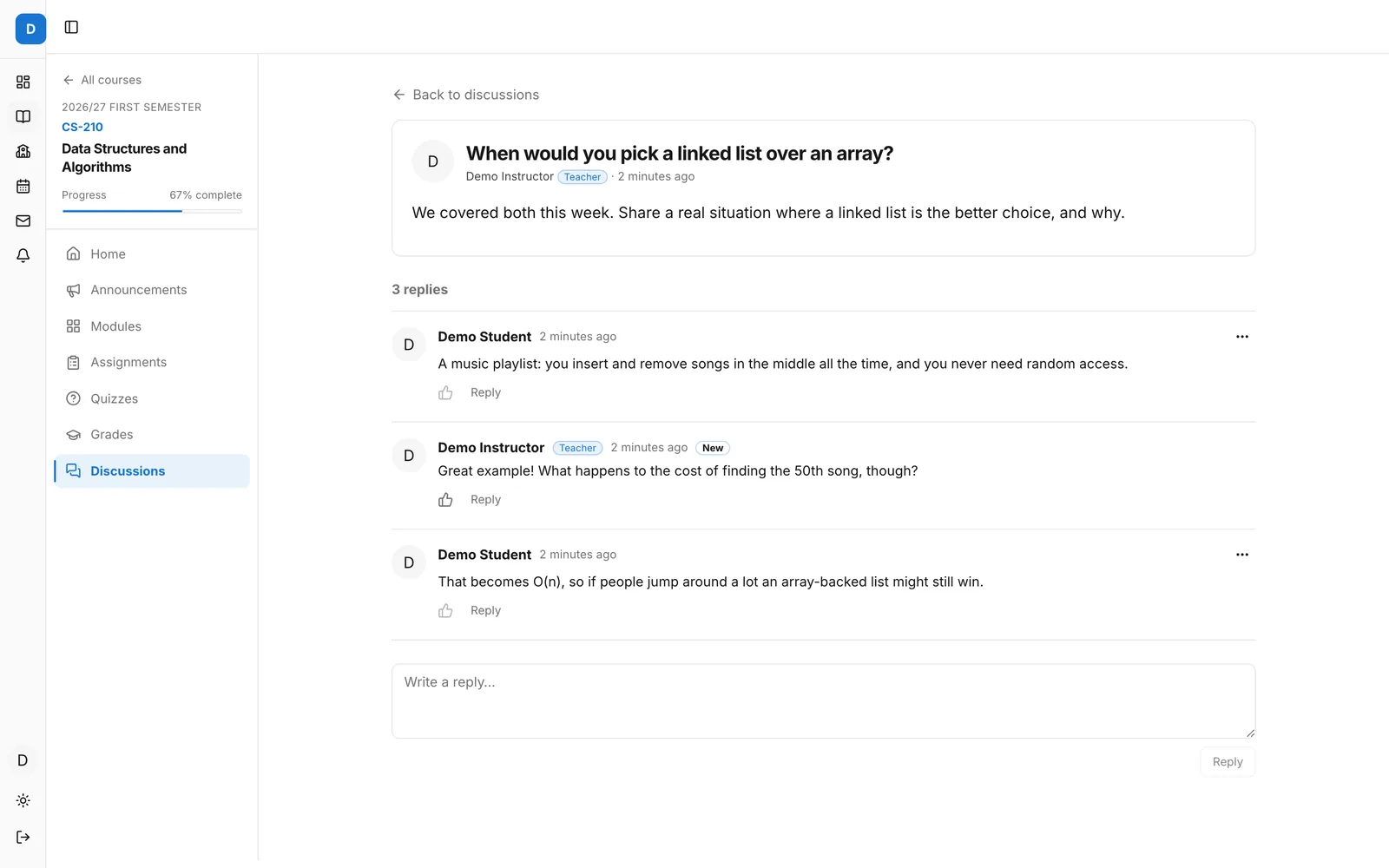 A course discussion in Lernie, with students and the instructor replying
Small changes in when and how feedback arrives add up over a term. Start with one habit this week, and you'll see the difference in the next assignment.